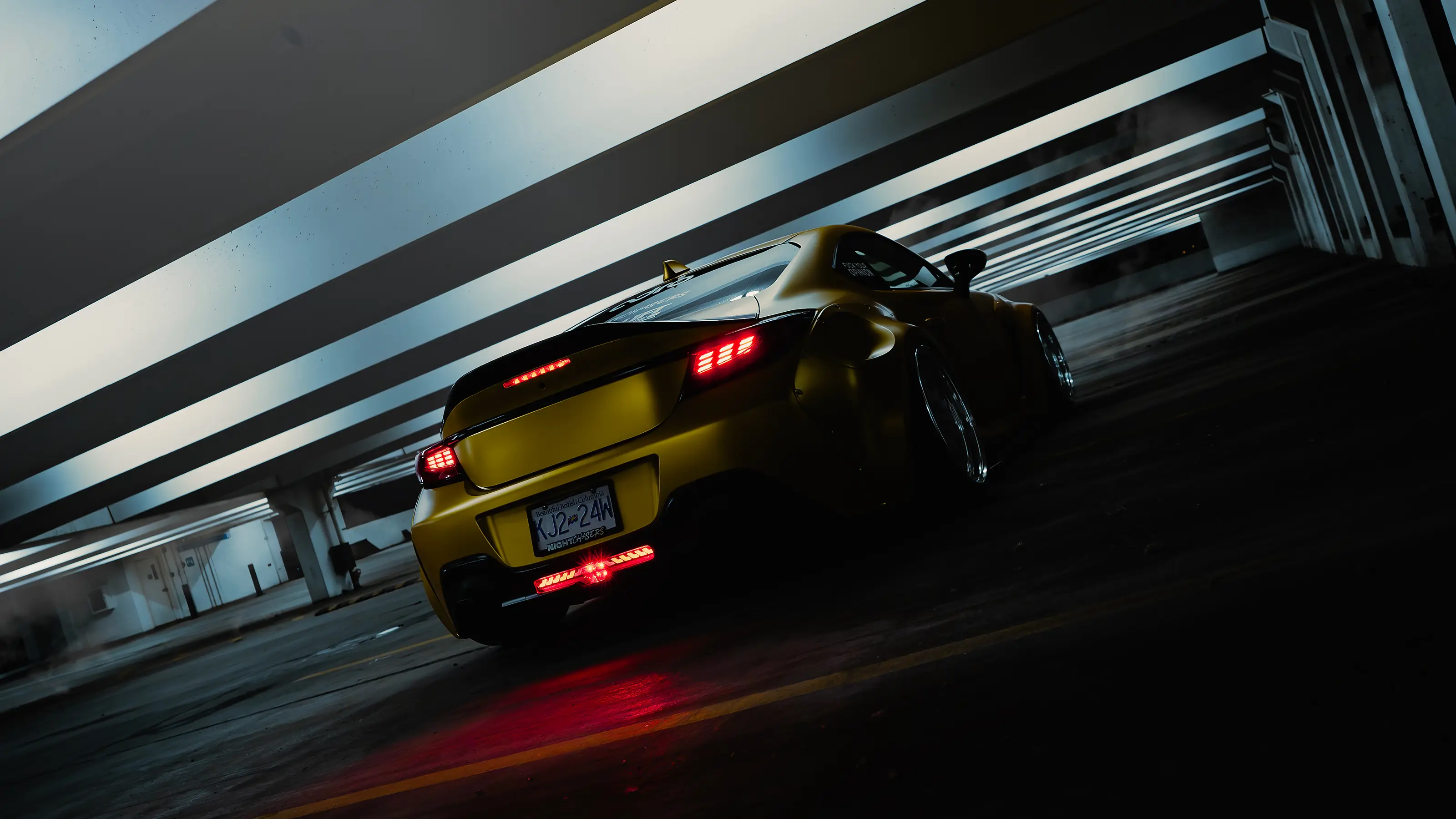
Every fall, booking inquiries slow down as owners wait for "better weather." Meanwhile, some of the most striking images in my portfolio exist because of Vancouver rain, not despite it. If you've been postponing a shoot until summer, this post might change your calendar.
What rain gives you that sun can't
Reflections double every light in the frame
Wet asphalt is a mirror. At night, one streetlight becomes two — the light itself and its reflection streaking toward the car. A parkade exit, a neon sign, a traffic signal: on dry pavement they're background; on wet pavement they're composition. This is the core of the moody night aesthetic that dominates automotive social media, and it simply doesn't exist on a dry street.
Saturated, glossy paint
A light film of water deepens paint the way a fresh coat of wax does. Beads on a well-detailed hood photograph beautifully in close-up — one more reason proper prep pays off.
Atmosphere for free
Mist softens backgrounds, headlights cut visible beams through drizzle, and overcast skies act as a giant diffuser — no harsh shadows, no blown highlights, even color across the whole car. Overcast midday is honestly easier to shoot than sunny midday.
Empty locations
Rain clears out every popular spot. Locations that need patience on a summer evening are wide open on a wet Tuesday night.
How a rain session actually works
- Drizzle and light rain: we shoot. That's the sweet spot — wet ground, minimal interference. Gear is weather-sealed and covered between setups.
- Sustained heavy rain: we reschedule, free. Heavy rain on the lens ruins frames faster than any mood it adds (rescheduling with 48+ hours' notice always costs nothing).
- The golden combo: rain that just stopped. Wet ground, clearing sky, sometimes fog — the best of every world, and very Vancouver.
Covered locations extend the options in any weather: parkade levels stay dry while their entrances frame the wet street outside. Half the night-shoot spots I use work in active rain for exactly this reason.
Camera notes for fellow shooters
If you're shooting your own car in the rain:
- Get low. Reflections grow as your camera drops toward the pavement. Shoot from knee height or lower.
- Position lights behind the car. Reflections streak toward the camera — put the light source on the far side and let the wet ground carry it to your foreground.
- Wipe the car strategically. Water beads look great on horizontal surfaces; drips on glass and mirrors look like neglect. A microfiber towel between shots is the difference.
- Protect the front element. A lens hood plus a wipe-check after every reposition. One drop on the lens is invisible on the tiny screen and enormous on a monitor.
- White balance intent. Mixed city lights over wet ground go teal-and-amber naturally — lean into it rather than neutralizing everything.
The honest downsides
Rain sessions run slower (more wiping, more cover moves), interiors stay closed unless there's shelter, and convertibles obviously wait for a dry window. For classics with vulnerable trim or storage-queen builds, we plan around covered locations or pick a dry-window date. It's a conversation, not a rule.
The takeaway
Vancouver's rain season is roughly October through April. Treating half the year as unshootable means missing the conditions that made half my favorite images. If you want the moody, reflective, cinematic look — the rain is the feature.
Book a wet-weather session: arashyx@gmail.com or the contact form. Flexible-date fog and rain windows available all season.