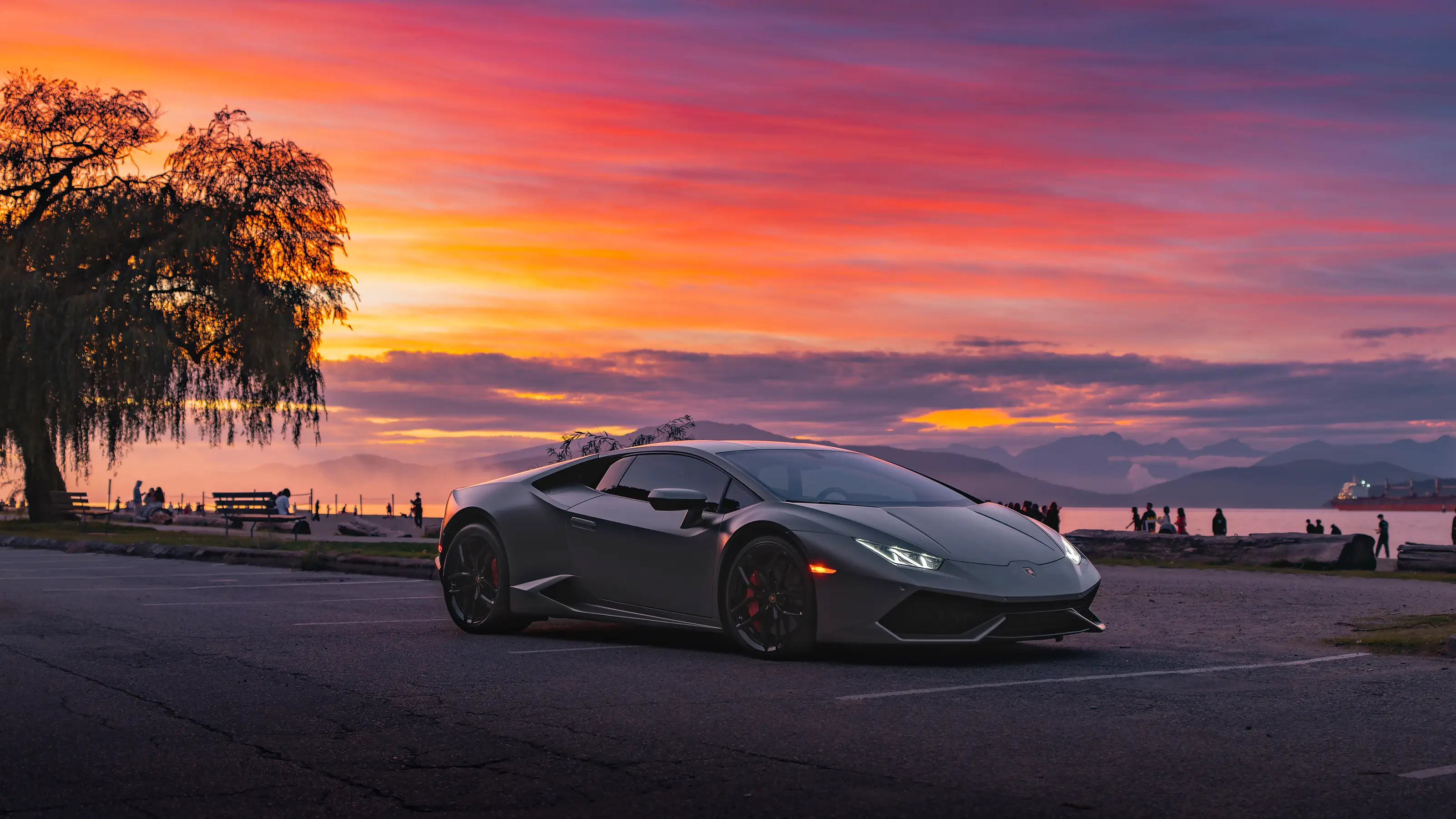
Ask ten car owners what shot they want most and nine will say the same thing: their car in motion, wheels blurred, background streaking past. That's a rolling shot — and it's simultaneously the most requested and most misunderstood shot in automotive photography. Here's how it actually works.
What a rolling shot is
A rolling shot (or tracking shot) is taken from one moving vehicle of another moving vehicle. The camera car and the subject car drive in formation while the photographer shoots from the camera car — through an open window or hatch, or with a rigged and tethered camera.
The signature look comes from one technical choice: a slow shutter speed while both cars move together. Because the cars match speed, the subject stays sharp — but everything that isn't moving with you (road, background, wheels spinning) blurs into streaks. That blur is what reads as speed.
Why it looks fast at 40 km/h
The counterintuitive part: good rolling shots happen at low speeds. At 40–60 km/h with a shutter speed around 1/30 to 1/60 of a second, the background blur looks like highway pace. Shooting faster doesn't add drama — it just multiplies risk and ruins the keeper rate, because holding a camera steady at 1/30s from a moving car is hard enough at city speeds.
This is the first thing that separates professional work from DIY attempts. Speed adds nothing. Technique adds everything.
What a safe, legal setup looks like
Rolling shots put two moving vehicles close together while one driver concentrates on formation driving. Doing this responsibly is non-negotiable:
- Quiet, pre-scouted roads. Wide, low-traffic routes with predictable surfaces and no pedestrians — scouted in advance for the light and the background. Some of the best filming roads around Vancouver are chosen exactly for this.
- A briefed driver, not a passenger with a phone. The camera car driver's only job is smooth, legal, constant-speed driving. Speeds stay at or under the limit — remember, the look doesn't need speed.
- Communication before wheels move. Formation, distances, start and end points, and hand signals or a phone call on speaker are agreed before the run, not improvised during it.
- Secured equipment. Anything pointed out of a vehicle is strapped or tethered. A dropped camera at 50 km/h is a projectile.
What it never looks like: hanging out of a sunroof in traffic, improvising on a public street with pedestrians, or chasing a car that's showing off. A professional will refuse those conditions — that refusal is part of what you're hiring.
The gear that matters (less than you think)
A rolling shot needs a camera with good stabilization, a wide-to-normal lens, and practiced technique — panning discipline, burst timing, and a feel for which frames will be sharp. Modern in-body stabilization helps enormously; beyond that, the gear matters far less than the fundamentals. For video tracking shots, a gimbal smooths out the camera car's vibrations the way stabilization does for stills.
For the record, mine: a Sony A7 IV for stills and video, a DJI RS4 Pro gimbal for tracking footage, and DJI action cameras for rigged and low-angle perspectives. Worth knowing what a photographer actually shoots with — but worth far more knowing how they handle your car, which is the part that varies.
Stills vs. video tracking shots
The same formation driving produces two different products:
- Still rolling shots — the blurred-wheel hero images that lead a photo set.
- Video tracking footage — sustained car-to-car clips that form the motion backbone of a cinematic car video, cut between static details and interior shots.
A combined photo + video session can capture both in the same runs, which is the most efficient way to get the full package — one briefing, one route, two deliverables.
When to hire it out
If you've read this far, you can probably see why rolling shots are the part of a shoot least suited to DIY: they need a second vehicle, a briefed driver, a scouted route, slow-shutter technique, and an unhurried hour of repeated runs. It's the difference between one lucky frame and a set of consistent keepers.
Rolling shots are included in most of my car videography projects and photo sessions across Metro Vancouver — if you want your car shot in motion, get in touch and tell me what you drive.