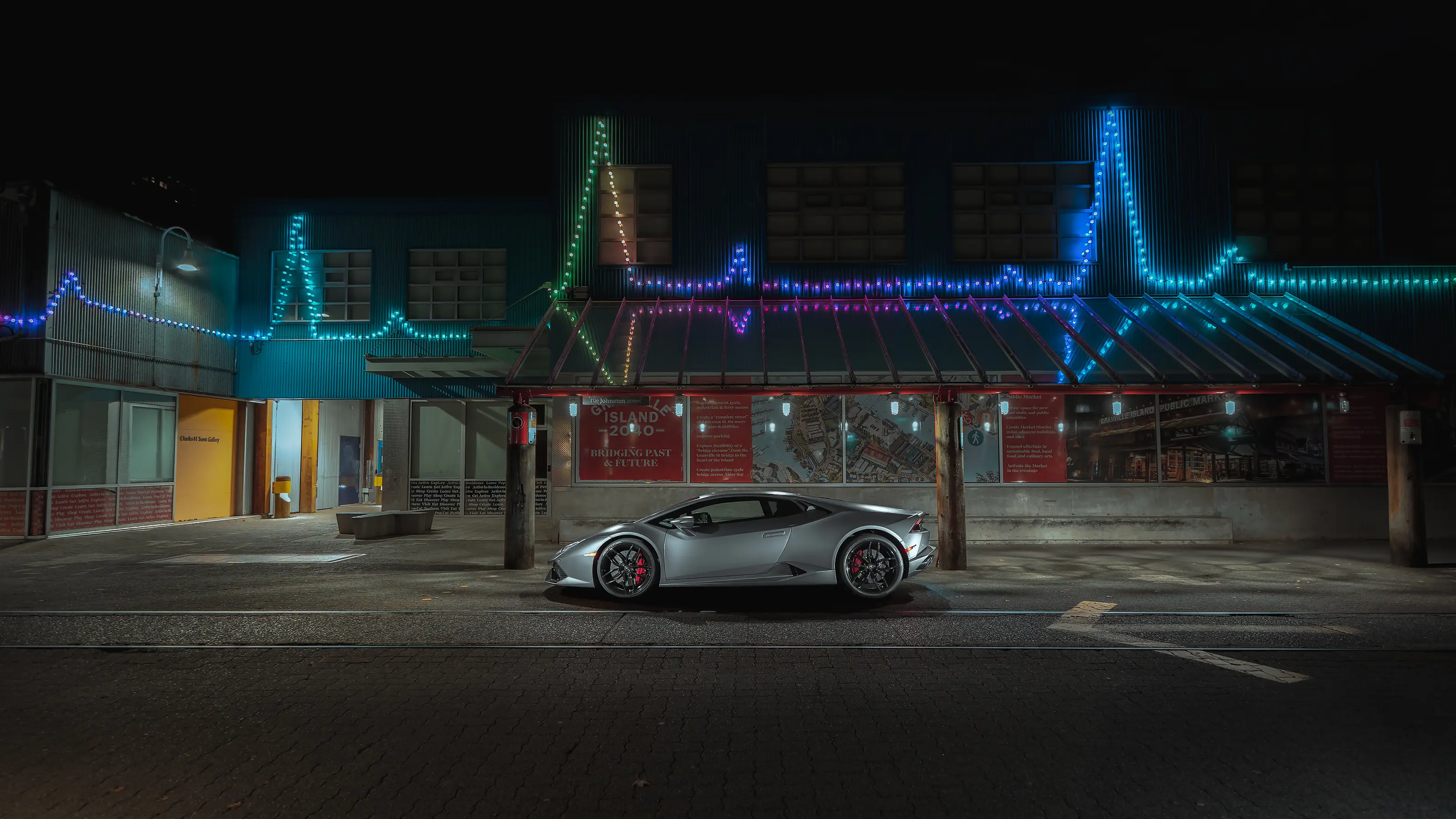
If your car is worth more than most cars on the road, booking a photoshoot involves a question that never comes up with an ordinary sedan: can I trust this person around my car?
It's a fair question and most photographers never address it publicly. So here's my complete answer — how I actually work around high-value cars — plus the questions you should ask any photographer you're considering, including me.
The core rule: I never drive your car
You drive. Always.
Every position, every angle, every reposition between frames — I direct, you drive. Your car stays in your possession for the entire session. There's no moment where I'm behind the wheel, no "let me just pull it forward a bit," no handing over keys.
This isn't a limitation on the work — it's how the work gets done properly. You know your car's clearance, its turning circle, where the splitter sits. I know where it needs to be in frame. Splitting those two jobs is faster and safer than merging them.
On insurance, honestly: I don't carry commercial photography insurance, and I'd rather tell you that plainly than let you assume otherwise. What protects your car on my shoots isn't a policy — it's that I'm never in control of it. If a photographer does tell you they're insured, ask what the policy actually covers, because "insured" can mean anything from liability for a tripod on someone's driveway to full care-custody-and-control coverage of your vehicle. Most of the time it isn't the second one.
Location scouting protects the car
The wrong location damages cars before a single frame is taken. Scouting for a low, wide, expensive car means checking things that don't matter for a normal shoot:
- Approach angles and driveway lips — a lowered car with a front splitter can't enter half the parking structures in Vancouver without scraping. I check entrances before, not on the day.
- Surface quality — loose gravel throws stones at rocker panels and rear arches. Fresh chipseal is worse.
- Staging space — room to position and reposition without three-point turns in tight quarters.
- Foot traffic and attention — a supercar draws a crowd, and a crowd around a parked car is a risk in itself. Quieter locations and off-peak timing keep the car and the session under control.
The locations I recommend around Metro Vancouver are filtered through this before they're ever suggested to a client.
Rolling shots: slow, briefed, and boring on purpose
Rolling shots are where photographers get cars damaged. The technique is well understood; the discipline is what varies.
How mine run:
- Route scouted in advance — a wide, quiet road with predictable surface, legal shoulder access, and no pedestrians.
- Everything agreed before wheels move — formation, following distance, speeds, start and end points, hand signals, and how we abort a run.
- Legal speeds, always. 40–60 km/h with a slow shutter produces the blur that reads as highway pace. Speed adds risk and nothing else. Your car never needs to be driven hard for a rolling shot.
- Equipment secured — anything pointed out of the camera car is strapped and tethered.
- Any run gets aborted if traffic, light, or conditions change. There's always another pass.
What I won't do: shoot in live traffic, hang out of a moving vehicle on a public street, or shoot rollers with an owner who wants to "open it up a bit" for the camera. Those requests get a no. If a photographer agrees to them enthusiastically, that tells you something.
Discretion is a service too
Not every owner wants their car on the internet. Some cars are recognizable enough that a photo effectively announces where the car lives.
Tell me before the shoot and your photos never appear in my portfolio, on social media, or anywhere else — you get the images and that's the end of it. No pressure and no discount for publicity; it doesn't change the price. Same applies to plates: I'll remove or obscure them in post on request.
What to ask any car photographer
Use these on me and on anyone else you're considering — the answers are more revealing than a portfolio:
- "Can I see two complete recent galleries from cars like mine?" Full deliveries, not highlight reels. A reel hides inconsistency; a full gallery can't.
- "Who drives my car during the shoot?" There's one correct answer.
- "What's your rolling shot process, and what speeds?" If the answer involves high speed or improvisation, that's your answer.
- "Are you insured, and for what specifically?" Ask what the policy covers, not just whether one exists.
- "How many final edited images do I get, and how fast?" Get a number and a timeline in writing before you book.
- "What license do I get?" Personal use, resale listing, and commercial marketing are genuinely different things. Sort it out before, not after.
- "What happens if the weather kills the shoot?" Rescheduling policy, deposit handling — Vancouver rain is a real variable.
Any photographer worth booking will answer all seven without hesitating. My answers to them are on the exotic and supercar photography page, and if anything isn't covered there, ask me directly.
Got a car you're protective of? That's the right instinct. Tell me about it — I'll walk you through exactly how the session would run before you commit to anything.