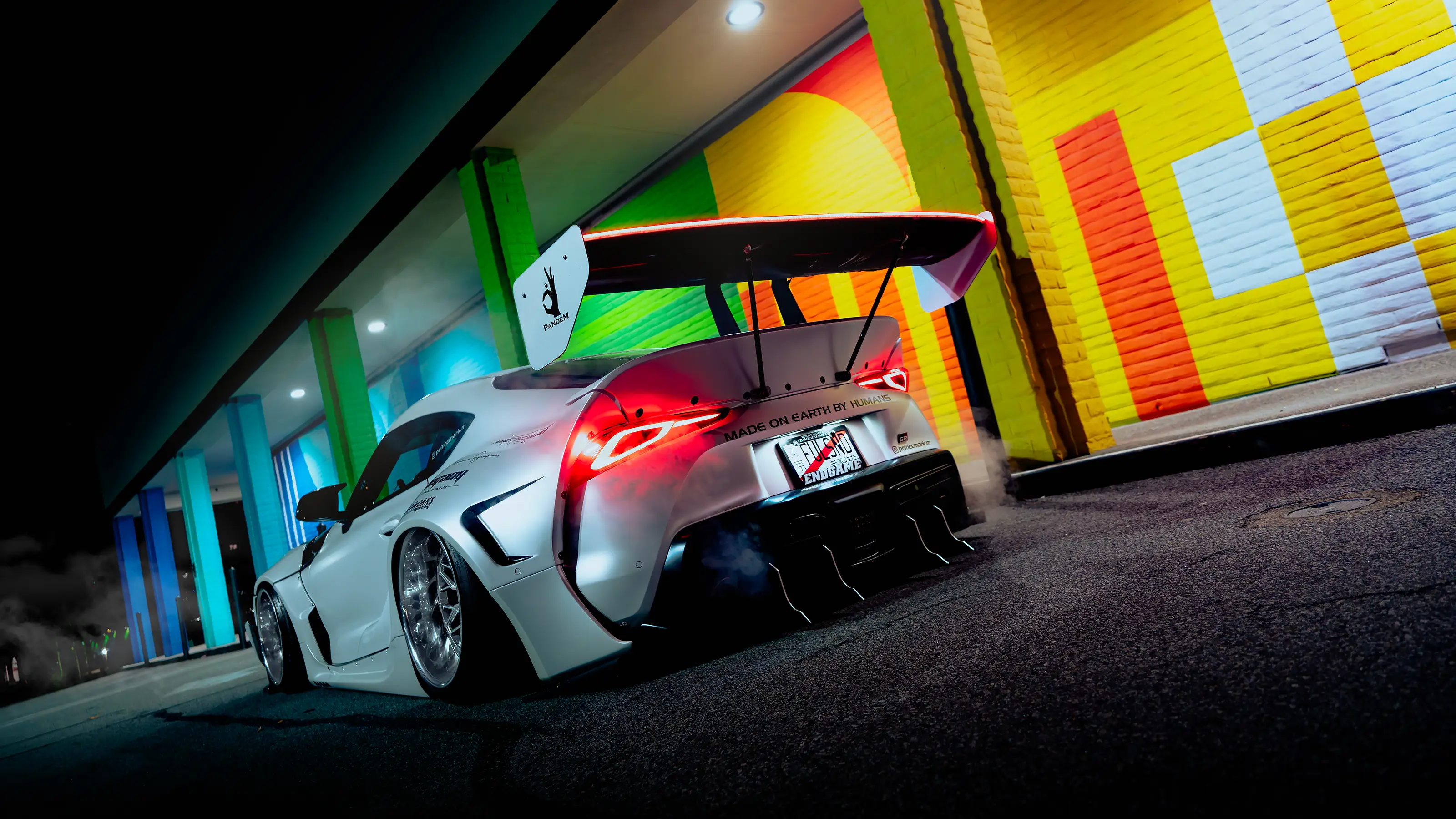
When a client asks why a one-minute video takes weeks while photos take days, it's a fair question — and the answer is the best explanation of what you're actually paying for. Here's the full production process behind a cinematic car video, start to finish.
Pre-production: the part nobody sees
Before anything gets filmed:
- Concept and shot list. A cinematic edit isn't random pretty clips — it's a story arc: arrival, details, motion, climax. Every shot on the list has a job.
- Location and route scouting. Rolling shots need roads with the right speed, surface, light, and legal shoulder access. Static locations need to match the car's character — a widebody build gets parkade concrete, a classic gets heritage streets.
- Timing around light. The best shots in most car edits happen in a 30-minute window of the day.
The shoot day
A typical video shoot runs 2–4 hours and covers:
Static and detail work
Slider moves across body lines, rack-focus on badges, lighting passes on paint. These "b-roll" details are the connective tissue of the edit — skip them and the video feels like a highlight reel instead of a film.
Rolling shots
The signature of automotive video: the car in motion, shot from a second vehicle with a gimbal. This is a two-person, two-car operation with planned routes, radio communication, and safe speeds. One usable 8-second rolling clip can take five passes.
Sound
Engine start, exhaust note, interior clunks and clicks — recorded separately with a dedicated mic. Real sound is half of what makes an edit feel expensive; videos with only music over silent footage always feel flat.
Post-production: where the weeks go
For every finished minute, expect several hours of raw footage and many more hours of work:
- Selects. Reviewing every clip and pulling the usable seconds.
- Story cut. Arranging selects into the arc, timed to music. This is rewritten multiple times.
- Sound design. Layering real engine audio, ambience, and music so transitions hit with the beat.
- Color grading. The single biggest "cinematic" factor — footage is shot flat and graded shot-by-shot for a consistent filmic look.
- Finishing. Stabilization touch-ups, speed ramps, titles, and exports for each platform (16:9 for YouTube, vertical cuts for Reels/TikTok).
This is why my delivery window for video is 2–8 weeks depending on complexity — quality over speed, always. See the current video work here.
What this means if you're commissioning one
- For owners: a cinematic edit is the single best keepsake of a build — it captures the sound and motion photos can't. Pair it with a photo set in one session for the best value.
- For dealerships and brands: video consistently outperforms stills for engagement on social, and a launch video gets reused across ads, web, and showroom screens for years. Details on business engagements are in the dealership guide.
Frequently asked questions
Can you do just a short Reel instead of a full edit? Yes — shorter deliverables with a lighter edit are a common option. The shoot process is similar; the post-production scope is what changes.
Do I drive my own car in rolling shots? Usually yes, with full briefing and conservative speeds. For some shots we use a professional driver arrangement — decided in planning, never improvised.
What music do you use? Licensed tracks cleared for your intended use — critical for business clients publishing to ads and social.
Want your build on film? See the full car videography services, watch recent videos, then email arashyx@gmail.com with your car and the story you want told.